If you have driven past a blue stretch of road recently and wondered what it meant, you are already seeing ERP 2.0 in action. Singapore is in the final stretch of transitioning away from its 27-year-old gantry based Electronic Road Pricing (ERP) system to a fully satellite-driven model.
The current gantry-based ERP system has been in operation since 1998. While it has served Singapore well, it has reached the end of its operational lifespan. ERP 2.0 replaces the physical gantry infrastructure entirely with Global Navigation Satellite System (GNSS) technology, the same satellite positioning used in modern GPS devices.
Instead of deducting charges as a vehicle passes under a physical gantry, ERP 2.0 uses an On-Board Unit (OBU) installed in the vehicle to determine its precise location and calculate distance-based road pricing in real time. This also opens the door to more flexible charging in the future, including the ability to spread charges across multiple locations rather than concentrating them at a single point.
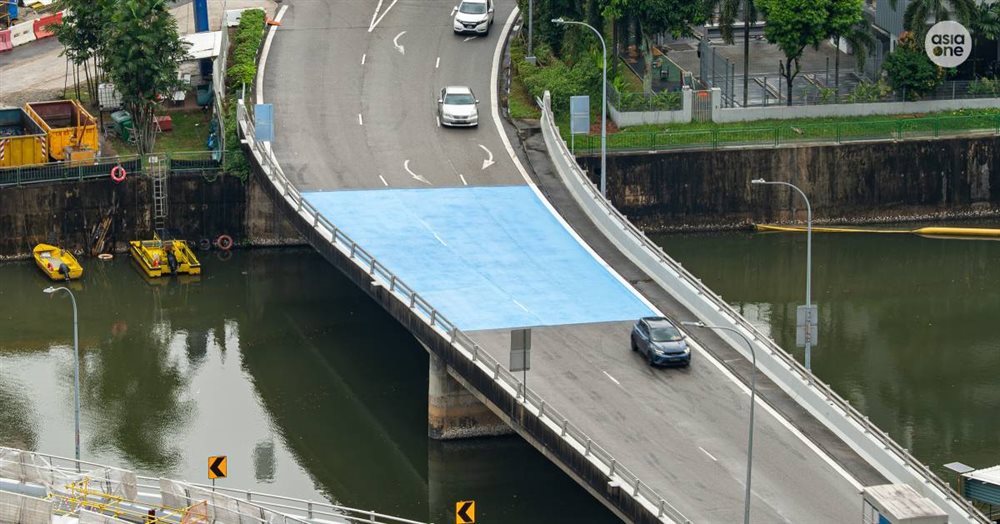
Photo Credit: AsiaOne/Fitri Salleh
One of the most visible changes already appearing on Singapore roads is the introduction of blue road markings and new signage.
.jpg)
Photo Credit: AsiaOne/Joel Lee
Since May 2026, LTA has begun rolling out 'ERP Charge Zone' signs and blue-painted lane markings, Oval blue 'ERP' symbols and 25-metre blue stretches, to replace the visual role that physical gantries have always played.
Of the 95 ERP gantries currently installed across Singapore, only 22 remain operationally active. LTA has confirmed that gantry removal will begin later in 2026, starting with those already out of operation. All gantries are expected to be fully removed by end-2026, with signboards retained at key locations to inform motorists of active ERP charging zones during the transition period.
Every Singapore-registered vehicle, including commercial vehicles, vans, trucks, and lorries must have an OBU installed before 1 January 2027. The OBU replaces the old In-Vehicle Unit (IU) and is the hardware that enables ERP 2.0 to work. Some key things to take note:
-
Free installation ended on 20th May 2026. Any OBU installation after this date now costs S$70 per vehicle (excluding motorcycles, which cost S$35).
-
As of 31st January 2026, over 93% of Singapore-registered vehicles, roughly 930,000 have already installed an OBU across 300+ authorized workshops nationwide.
-
Tampering with or unauthorized servicing of an OBU carries serious penalties: a fine of up to S$20,000, up to 12 months imprisonment, or both.
-
Missed ERP charges are now decriminalized under amended Road Traffic Act provisions, operators who miss a payment due to technical issues or insufficient balance have a 5-day grace period to settle outstanding amounts.
For businesses operating trucks or vans in Singapore, ERP 2.0 is not just a compliance checkbox, it signals a broader shift in how road usage will be priced and monitored. The OBU supports cardless backend payment (via EZ-Link Motoring Service), real-time charge display, and future integrations including electronic parking payments and flash flood alerts for drivers on affected roads.
For operators managing high-mileage commercial fleets, particularly last-mile delivery vans or multi-drop lorries covering the CBD and expressway corridors, the shift to distance-based satellite pricing may eventually alter route-planning and operational costs. It pays to understand the system now, before the January 2027 deadline introduces unknown penalty structures.
A common question from operators expanding into electric vehicles in Singapore is whether EVs are exempt from ERP2.0. The answer is no. All Singapore-registered vehicles, including electric vans and electric trucks must comply with the OBU requirement. ERP 2.0 is vehicle-type neutral, it charges based on road usage and location, not fuel type. If your business is transitioning to EV commercial vehicles, factor OBU installation into your fleet onboarding process from day one.
If you’re in the market for a used commercial vehicle in Singapore, whether a pre-owned truck or pre-owned van, make sure the OBU has been properly installed and is in working order before completing any transaction.
At Skylink Auto, our team assists businesses across Singapore with acquisition, and sale of commercial vehicles, from used vans to pre-owned trucks and electric vehicles. As part of our advisory process, we help operators understand compliance requirements like ERP 2.0 so you are never caught off guard.
Visit Us at Wcega Plaza or reach out to our team today.